Gemini 3.8 Flash is Google's third Flash release in six weeks, launched September 2, 2026 alongside a restricted sibling model called Gemini 3.8 Flash Cyber, built specifically for vulnerability research. The standard model is open to anyone with a Google account; the Cyber variant is gated behind a new application process called the Fairwind Program.
Short answer: Gemini 3.8 Flash launched September 2, 2026 at $0.75/M input and $3.75/M output tokens through December 31, 2026 (then $1.50/$7.50). It has a 1,048,576-token context window and a 65,536-token output cap. Gemini 3.8 Flash Cyber is the same base model tuned for vulnerability discovery and patching, restricted to vetted defenders through Google's Fairwind Program.
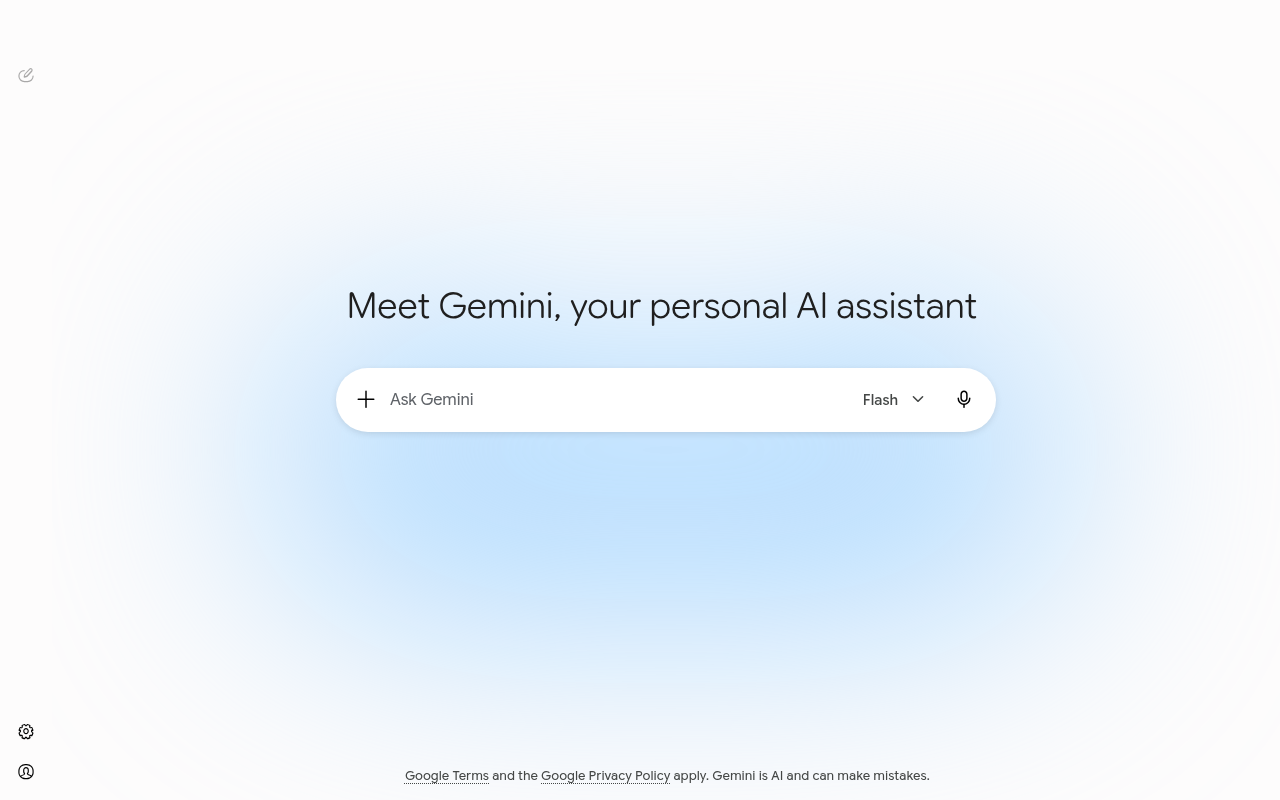
In my testing, I pulled the pricing and benchmark numbers below from Google’s own launch post and cross-checked the token limits against the current Gemini API pricing page, since third-party writeups on launch day tend to round numbers or copy each other's typos. Here's what 3.8 Flash actually costs, what makes the Cyber variant different, and how to get access to each one.
What you'll need
For the standard model, a free Google account is enough to try it in AI Studio — no card required for the rate-limited playground. Building against the API needs a Google AI Studio or Vertex AI project with billing turned on, since Flash is pay-per-token from the first call. Consumers who want it in a chat window need a Google AI Pro or Ultra subscription, since it's rolling out through the Gemini app, Search's AI Mode, and Google Sheets rather than the free tier. Gemini 3.8 Flash Cyber needs none of that — it needs an accepted application to the Fairwind Program, which is currently limited to government agencies, critical infrastructure operators, and vetted security researchers.
Step-by-step: Gemini 3.8 Flash and Cyber
1. Decide which model you actually need
If you're writing code, building an agent, or doing general reasoning work, you want standard Gemini 3.8 Flash — it's the one in AI Studio's dropdown. If your task is finding or patching security vulnerabilities in software you're responsible for, you want Cyber, and you'll need to apply first; the standard model will decline or heavily hedge on the same prompts.
2. Try the standard model in AI Studio first
Open the model picker in Google AI Studio and select "3.8 Flash." Google kept 3.7 Flash, 3.6 Flash, and earlier Cyber releases selectable in the same list, so check the version number before you assume you're on the newest one.
3. Generate an API key and call it by its model ID
Sign in at Google AI Studio, generate a key, and call the model as gemini-3.8-flash:
“python from google import genai client = genai.Client(api_key="YOUR_KEY") resp = client.models.generate_content( model="gemini-3.8-flash", contents="Summarize this in three bullet points: ..." ) print(resp.text) “
4. Apply to the Fairwind Program if you need Cyber
Head to Google's Fairwind Program page and submit the access request form. Google states it prioritizes government authorities, critical infrastructure operators, and maintainers of widely used software, and requires accepted organizations to enforce phishing-resistant MFA and track employee access to the model.
5. Set a thinking level instead of leaving it on default
Both models support low, medium, and high thinking configurations. In my testing, low was plenty for a short rewrite or a basic regex fix, and noticeably faster than high; switching to high on a genuinely multi-step debugging task produced a more careful answer at a slower response time.
6. Budget around the January 2027 price jump
The $0.75/$3.75 per-million-token rate is introductory and expires December 31, 2026. From January 1, 2027 it doubles to $1.50 input and $7.50 output. If your project runs past year-end, plan around the higher number.
Example prompts you can copy
For standard Gemini 3.8 Flash:
- "Here's my repo structure [paste or attach]. Find the bug causing [symptom], fix only that file, and explain your reasoning before the diff." (Tests the DeepSWE-style coding gains Google highlighted at launch.)
- "Plan and execute a multi-step task: open this webpage, extract the pricing table, and return it as JSON." (Tests agentic tool use.)
- "Read this 40-page PDF and list the three numbers I should double-check before repeating them externally." (Tests the 1M-token context window on a real document.)
For Cyber (once you have Fairwind access):
- "Scan this function for memory-safety issues and propose a minimal patch that doesn't change the public API." (This is the kind of task Google's Chrome Security team reported 2.6x more correct patches on versus larger commercial models.)
- "Given this CVE description and the affected file, reproduce the vulnerability class and suggest a fix with a one-line justification."
Common mistakes to avoid
The first mistake I'd flag: assuming "Cyber" is just a marketing label on the same model you already have access to. It isn't — it's a separately gated model behind an application, and most people who want it never apply, then wonder why they can't select it in AI Studio. Second, leaving the model picker on 3.7 Flash or 3.6 Flash without noticing, since Google keeps older Flash versions selectable in the same dropdown. Third, running everything at high thinking by default; in my testing, low handled routine work fine and saved real wait time. Fourth, budgeting next year's costs off the launch-week rate — the $0.75/$3.75 pricing is introductory and doubles on January 1, 2027. Fifth, treating Cyber's benchmark numbers as something you can replicate on the standard model — Google explicitly gives Cyber fewer safeguards around advanced security tasks so it can do work the general-availability model is built to limit.
Gemini 3.8 Flash and Cyber vs. the previous release
| Model | Input $/M tokens | Output $/M tokens | Context window | Access |
|---|---|---|---|---|
| Gemini 3.8 Flash | $0.75 (intro, through Dec 31, 2026) | $3.75 (intro) | 1,048,576 tokens | Open — AI Studio, API, Android Studio, Antigravity |
| Gemini 3.8 Flash Cyber | Not publicly listed | Not publicly listed | Same base model | Restricted — Fairwind Program application only |
| Gemini 3.7 Flash | $0.75 (its own intro rate, now list) | $3.75 | 1,048,576 tokens | Open — still selectable in AI Studio |
| Gemini 3.6 Flash | $1.50 | $7.50 | 1,048,576 tokens | Open — still selectable in AI Studio |
On Google's own benchmarks, 3.8 Flash scored 54.9% on HLE-Verified and outperformed larger frontier models on the DeepSWE v1.1 long-horizon coding benchmark. Cyber scored 86.2% on CyberGym and 47.2% pass@1 on CWE-Bench for patching, and Google's Chrome Security team reported it produced 2.6 times more correct vulnerability patches than larger commercial alternatives it tested against, per Google’s launch post.
Tools that make this easier
If you're deciding whether 3.8 Flash is worth switching to from an older Gemini model, my how to use Gemini guide covers the account setup this article assumes, and my breakdown of Gemini 3.7 Flash’s pricing and benchmarks is the closest apples-to-apples comparison if you're deciding whether to upgrade mid-project. If you're weighing Gemini against other assistants, Gemini vs. ChatGPT and Claude vs. Gemini cover the head-to-head comparisons, and I ran the same kind of pricing-and-benchmark check on Anthropic's flagship in Claude Opus 5: pricing, benchmarks, and setup guide. For coding work specifically, see how 3.8 Flash's gains stack up in best AI tool for code. My starter kit for AI is the place to begin if you haven't set up any model accounts yet.
My take on the Cyber split
Splitting off a separately gated security model is a bigger structural change than another point release would be. Standard 3.8 Flash is a solid, incremental coding-and-agents upgrade — worth trying if you're already in the Gemini ecosystem, not worth switching vendors over on its own. Cyber is the more interesting move: gating the most capable vulnerability-hunting behavior behind vetted access, rather than shipping it wide open, is Google betting that defenders benefit more from early access than attackers lose from not having it. Whether that holds depends on how fast Fairwind actually approves applicants, which Google hasn't published numbers on yet.
Last updated: September 4, 2026 · By Vishal Swami, Founder & Lead AI Reviewer, AISagely
Frequently Asked Questions
Gemini 3.8 Flash and Cyber: is it free?
Standard Gemini 3.8 Flash has a free, rate-limited playground in Google AI Studio and is included for Google AI Pro and Ultra subscribers in the Gemini app. The API is pay-per-token at $0.75/M input and $3.75/M output through December 31, 2026. Gemini 3.8 Flash Cyber isn't sold separately at all — it's granted through the free Fairwind Program application, not purchased.
How long does it take to get access to Gemini 3.8 Flash and Cyber?
Standard 3.8 Flash: a couple of minutes in AI Studio, or 10–15 minutes to set up a billing-enabled API project. Cyber: Google hasn't published a review timeline for Fairwind applications, so treat it as an unknown wait rather than something you can access same-day.
What is the easiest way to try Gemini 3.8 Flash?
Open Google AI Studio, select "3.8 Flash" from the model picker, and run a real task through it — a coding fix or a long PDF — rather than a generic chat prompt. That's the fastest way to judge whether it's worth switching from whatever Gemini model you're on now.
Is Gemini 3.8 Flash Cyber available to the public?
No. It's restricted to organizations accepted into the Fairwind Program — Google names government agencies, critical infrastructure operators, and maintainers of widely used software as its priority applicants. Independent researchers can apply, but general public access isn't part of the current rollout.
Is Gemini 3.8 Flash better than Gemini 3.7 Flash?
On Google's benchmarks, yes on long-horizon coding and reasoning tasks, though the gap is smaller than the jump from 3.6 Flash to 3.7 Flash was. If you're already getting good results from 3.7 Flash, the upgrade is worth testing on your actual workload before you assume it's a must-switch.